Why Traction Boards Are Your 4x4’s Best Friend by Dawie De Beer
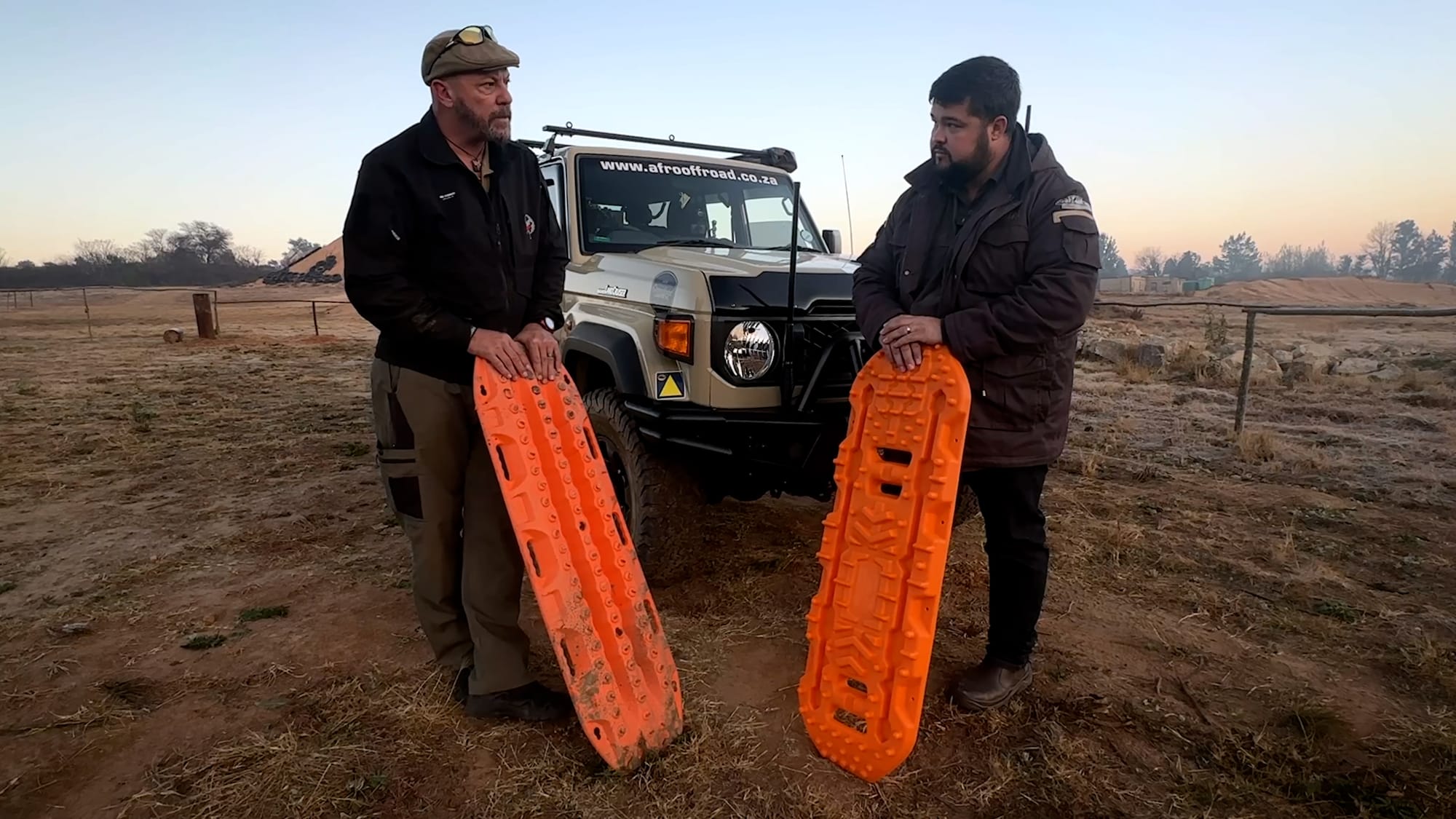
Let’s be honest for a second. We’ve all been there. You’re out on a weekend trip in the bush, feeling like a proper overland hero, until your bakkie suddenly drops into a heavy black-turf mud rut or buries itself belly-deep in soft sand. One minute you're conquering Africa, and the next you’re stationary, staring at a wall of dirt, wondering how on earth you managed that in under ten seconds.
Now, our predecessors out on the old South African overland and 4x4 trails used whatever was lying around—flat rocks, sturdy branches, and old stumps. Let’s not frown on using natural materials; it’s wonderfully practical when you're in a pinch, even if it doesn't always work on the first try. But let's be real: if every overlander before us kept harvesting every rock and log on the trail, half the bush would look like a bald lawn. Let's save Mother Nature a bit of dignity and leave the landscape intact rather than turning every obstacle into a landscaping project!
When panic starts whispering that you need to hook up a heavy kinetic monster straight away, that's the moment we take a deep breath. Because as we teach in our Mastering Recovery training modules, a good recovery is about thinking, not pulling.
And that brings us to the golden rule of getting unstuck.
The Recovery Formula: Why We Don't Just Smash the Gas Pedal
When your tyres turn into high-speed excavators and your chassis settles onto the earth, two things have completely vanished: clearance and traction.
Our self-recovery playbook follows a strict logical flow:
- Lift: Use a jack or get weight off the bogged area to create space under the chassis or tyres.
- Dig: Clear a clean ramp for the tyres so you aren't fighting a vertical wall of mud.
- Pack or Fill: Bring in traction boards to bridge the gap and provide a high-friction surface.
- Recover: Drive out of the obstacle by limiting wheel-spin. If this does not work with a couple of bystanders pushing the vehicle, you can move to attaching a static, kinetic, or winch rope.
Traction boards handle the first two parts of the equation brilliantly. Getting the tracks right under the wheels gives you immediate lift, fills the void with purposeful design and high traction, and lets you drive right out of the sticky situation—or sets you up nicely to be pulled out safely if things are properly pear-shaped.
Why Choose High-End Traction Boards to Do the Heavy Lifting
The local 4x4 market is full of cheap plastic boards that look like colourful lunch trays. But when you’re out in the middle of a remote South African trail and your 3-tonne bakkie is resting on them, material science matters.
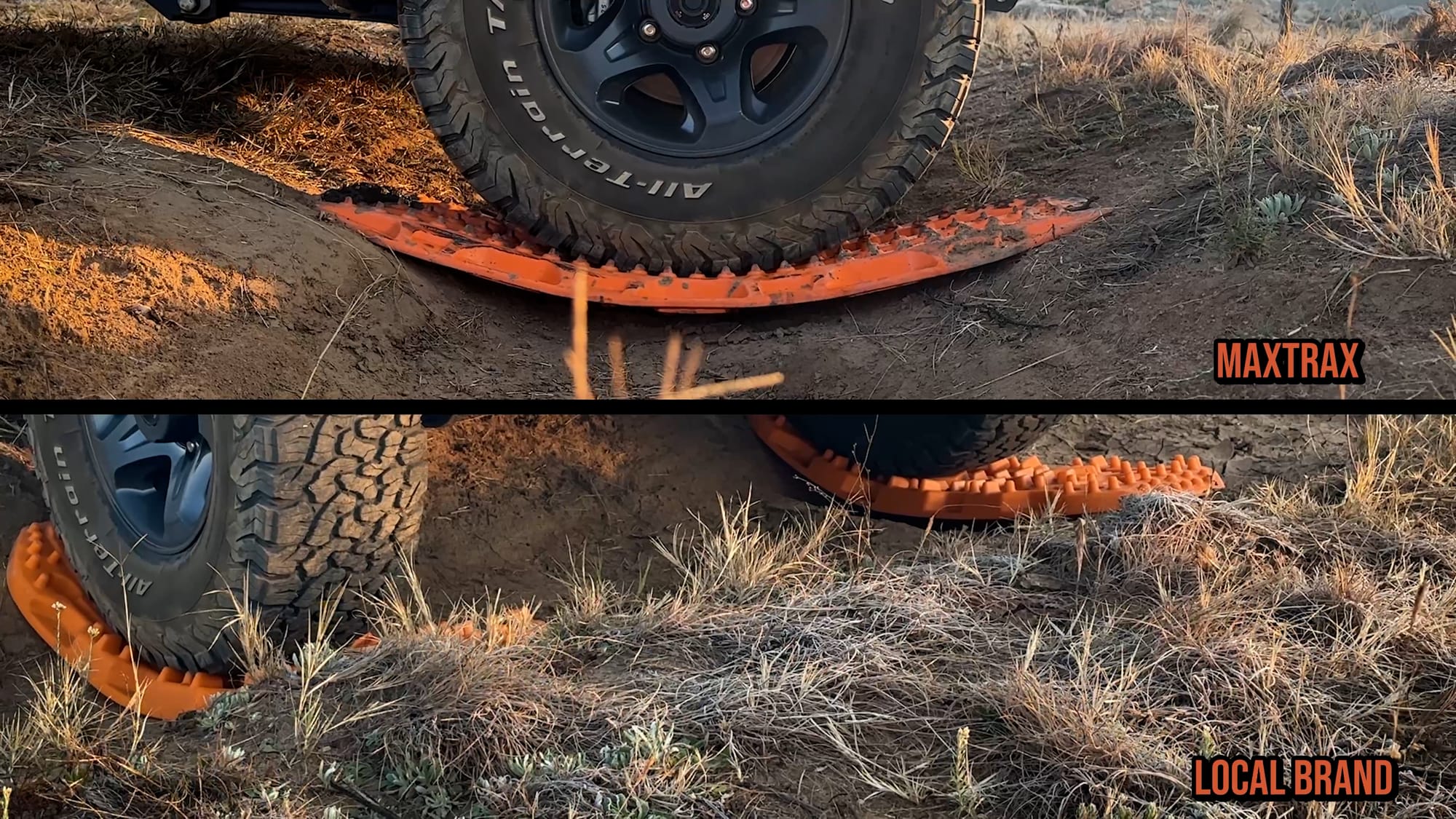
Here is why investing in quality gear like MAXTRAX makes all the difference:
- Engineering-Grade Nylon with Elastic Memory: Cheap polypropylene boards snap the moment the temperature drops or a heavy 4x4 puts weight on a bridge gap. Look for a rugged nylon blend that flexes under massive loads and pops right back to flat without cracking.
- Purpose-Built Teeth: The tooth geometry needs to interlock with your tyre tread lugs without chewing them to pieces under high torque.
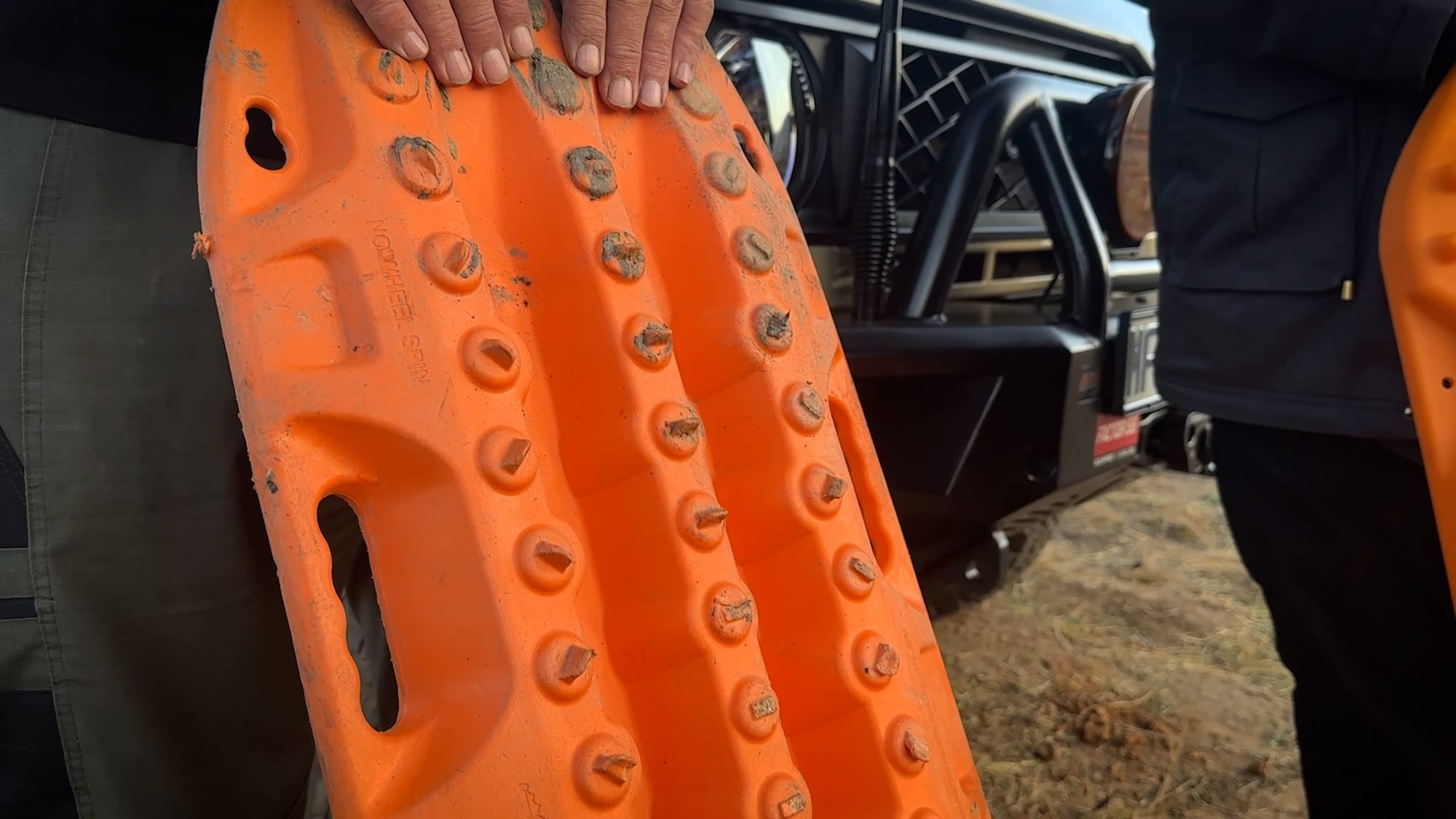
4-Step "Keep Your Cool" Recovery Plan
Next time you find yourself dug in deep, skip the heroics and run through this checklist:
- Stop and Assess: Stop spinning your tyres immediately, and secure the vehicle.
- Dig & Lift: Clear the packed mud or sand from in front of the tyres so your tread has a ramp to climb, not a cliff face.
- Wedge the Boards: Shove your traction boards firmly under the tyre tread to provide that crucial initial lift and high-friction pack.
- Steady Does It: Select low-range, feed in a smooth, gentle throttle, and let the tyres climb right up onto the boards without wheel-spin. Drive right out to solid ground.
Drive with discipline, respect the terrain, and remember: slow is smooth, smooth is safe.
Want to turn your off-road anxiety into absolute calm and confidence? Visit Afro Offroad and book a hands-on 4x4 training course with our expert team at Syringa Park.
Adventure. Mastered!
Dawie de Beer is the Founder & Lead Instructor at Afro Offroad
With nearly 20 years as a Senior Land Rover Experience instructor and expedition leader, Dawie (known across the Land Rover community as "Dirty Dawie") brings decades of trail grit to Afro Offroad.
Methodical and calm, Dawie focuses on proper driver inputs, vehicle behavior, and recovery systems ranging from basic self-recovery with a shovel to complex technical rigs using winches. Whether he's teaching or putting gear to the test, his goal is simple: building driver confidence through safe practices.
Watch our review on YouTube:
Dawie de Beer from Afro Offroad and Riaan le Roux from Rusty 4x4 Offroad Recovery Gear test some Maxtrax MKI Tractoin Boards.