Why Glove Size Matters More Than You Think for Offroad Recovery
The problem with safety gloves is that it needs to fit properly. When it comes to 4x4 rigging, winching, and handling recovery gear, gloves aren't just a nice-to-have — they're essential protection.

If you've ever looked at one of our Rusty 4x4 Offroad Recovery Kits, you've probably noticed that gloves are rarely included. That's not an oversight. It's deliberate, and the reason comes down to one simple fact: hands come in all shapes and sizes, and a glove that doesn't fit properly can do more harm than good.
The Problem With "One Size Fits All"
The problem with safety gloves is that it needs to fit properly. When I made knives as a hobby, I quickly learned that your safety gloves are a hazard if they are oversized – it can get caught in a belt grinder and pull your hand into the machine.
When it comes to 4x4 rigging, winching, and handling recovery gear, gloves aren't just a nice-to-have — they're essential protection against thorns, sharp fibres, and rope burn when you're hauling in a winch line by hand or working with a kinetic rope and soft shackles. But a poorly fitting glove creates its own set of problems.
Go too big, and the glove flops around on your hand. You lose the ability to do finer operations like operating soft shackles, the fit feels clumsy and uncomfortable, and more often than not, the glove ends up discarded after one use — despite the money spent on it. Go too small, and you may not even be able to get the glove on in the first place. Either way, you end up with gear that never actually protects you.
What a Proper Fit Looks Like
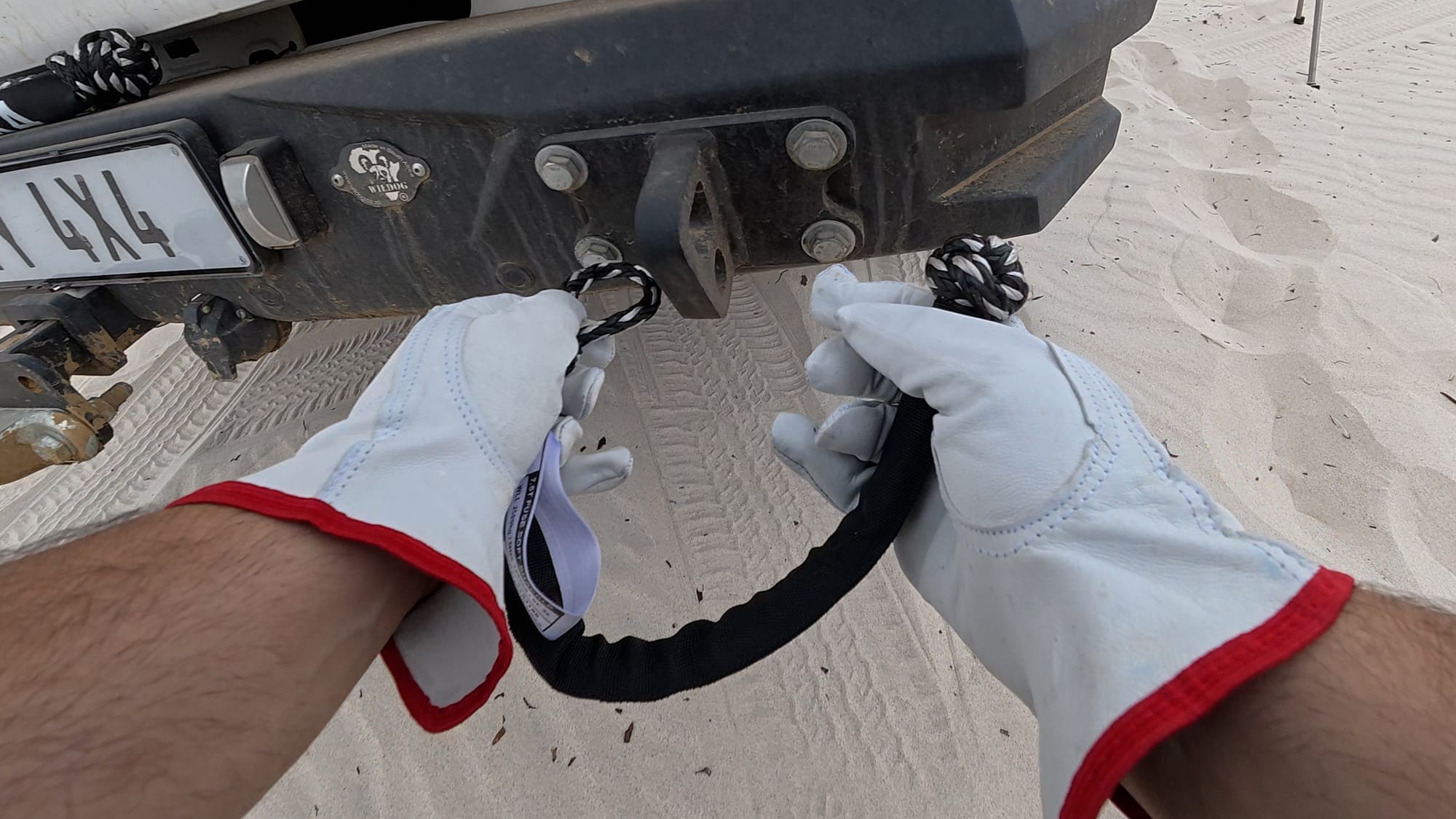
A safety glove should sit snug against your hand, with fingertips that end right where your fingertips do. That precision matters because your hands need to do fine, controlled work — pulling open soft shackles, guiding rope through recovery points, and manipulating small locking tabs — often under load and under pressure. You need to be able to operate your winch remote and not be tempted to pull the glove off.
Finding that fit isn't always instant. It can take a few trips to different safety stores, hardware stores, or lifting and rigging suppliers before you land on a glove that actually works for your hands. Thin goatskin leather gloves tend to strike a good balance between protection and the dexterity needed for technical recovery work, but the material matters less than the fit. Even a well-fitting pair of ordinary leather driving gloves can do the job, as long as you can still use your fingers properly while wearing them. With 4x4 rigging, you shouldn't have to worry about rope burns on your winch – if you do, then you need to get winch training on how to handle a winch line (more on that to come later!)
Why It Shows Up Most When Using Soft Shackles
The difference between a good and bad glove fit becomes obvious the moment you try to work a soft shackle. Opening the shackle, threading it through a recovery point, and closing it again all require a level of finger control that a loose or ill-fitting glove simply doesn't allow. Hence why sailers have special gloves which have good protection while letting the index finger and thumb stick out for finer control.
Soft shackles with a small pull tab, like that on our Rusty 4x4 18-Ton Soft Shackles, make this easier — the tab gives you something to grip and pull even with gloves on, rather than having to pinch and work the shackle material directly. But even with that design advantage, none of it matters if your gloves don't fit well enough to let you use your hands the way you need to.
The Bottom Line
Good gloves are a critical piece of your offroad recovery kit, but only if they actually fit. Before you head out on the trail, take the time to try on a few different pairs, in a few different stores if necessary, until you find a set that sits snug, lets you use your fingertips, and doesn't get in the way when you're working shackles, ropes, and rigging under pressure. It's a small investment of time that pays off exactly when you need it most.
When your gear is up to the task and you know how to use it, then you'll be #NotAfraidToGetStuck!